Learn to Unlearn — A Message for AI Drivers and Passengers Alike
When the ability to learn accelerates, the responsibility to unlearn becomes essential. We believe we are in control—creating, choosing, deciding. It is about awareness—and the discipline of unlearning in a world that rarely pauses. By: Sulaiman Nasir ( Salmi)

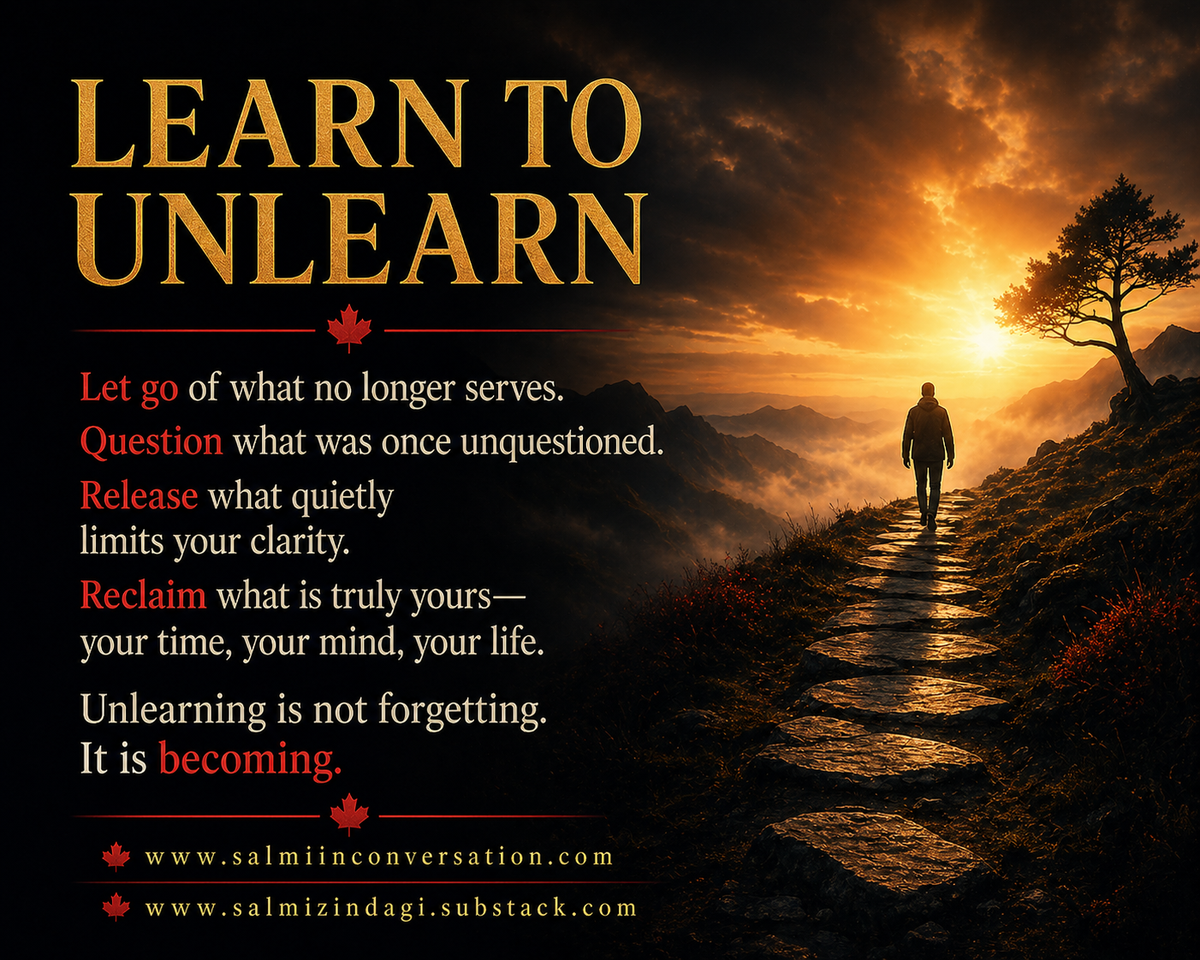
We are learning faster than ever—how to search, respond, and stay visible.
In an age of intelligent systems,
learning is no longer the challenge.
Unlearning is.
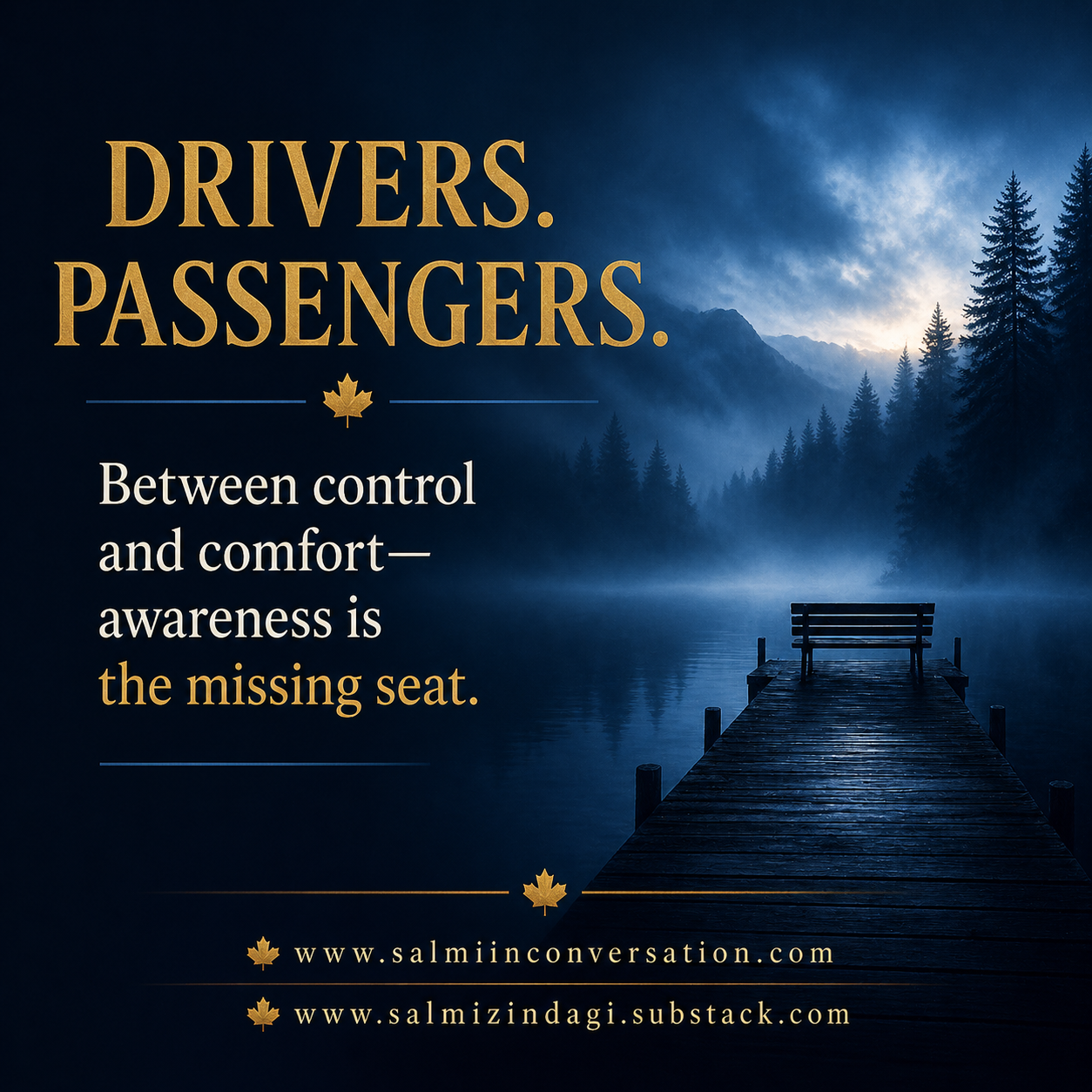
Between control and comfort,
between drivers and passengers,
lies a subtle truth:
awareness is not automatic.
It must be reclaimed.
But beneath this acceleration lies a quieter question:
What must be unlearned…
for any of this to still mean something?
In a world where some believe they are driving
and others move comfortably as passengers,
this reflection explores the space in between—
where awareness, not speed,
defines our direction.
We learned how to read.
We learned how to write.
We learned how to search.
We learned how to prompt.
We learned how to respond.
We learned how to stay connected.
And yet, somewhere along the way,
we forgot to ask:
What must be unlearned…
for any of this to still mean something?
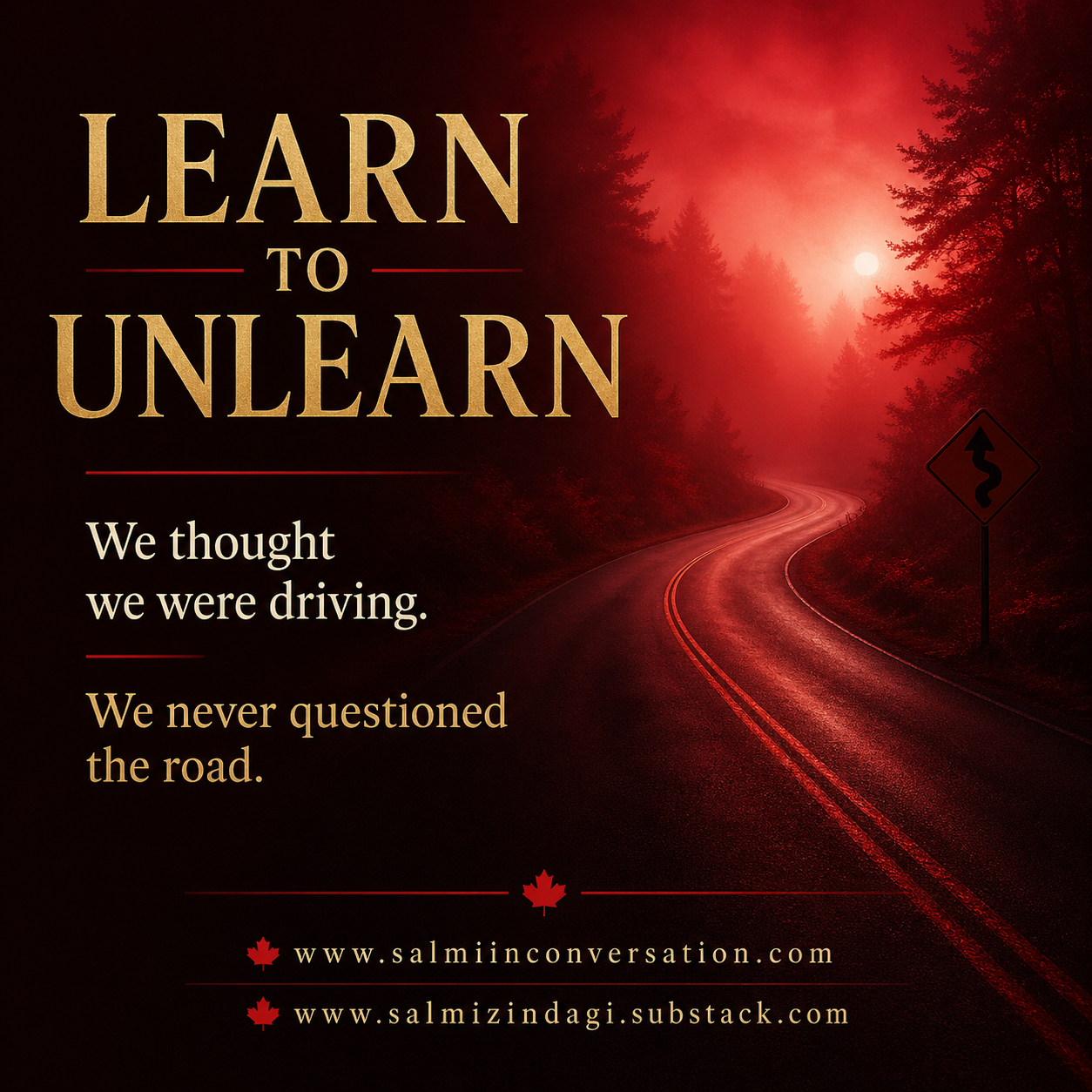
The Illusion of Driving
In this age of intelligent systems, many of us believe we are in control.
We write.
We publish.
We engage.
We direct conversations.
We call it creation.
We call it influence.
We call it leadership.
But beneath this sense of direction lies a quieter reality.
Visibility is filtered.
Reach is structured.
Choices are shaped—subtly, continuously, invisibly.
The question is not whether we are active.
The question is:
Are we truly driving…
or are we responding to routes already laid out for us?
The Comfort of Being a Passenger
For many, the experience is different.
There is no urgency to lead.
No need to direct.
There is ease.
Scroll.
Watch.
Listen.
Move on.
An endless flow of content, curated and delivered with precision.
Passengers are not wrong.
But comfort, when unexamined, carries a quiet cost.
Because:
Comfort without awareness
gradually becomes surrender.
Not imposed.
Not forced.
Simply… accepted.
The Architecture We Do Not See
It is easy to blame systems.
It is tempting to point outward—toward algorithms, platforms, technologies.
But these systems did not emerge in isolation.
They learned from us.
From our preferences.
Our pauses.
Our repetitions.
Our reactions.
They did not impose behavior.
They refined it.
And so, a more difficult question begins to surface:
What have we taught the systems about ourselves—
without realizing it?
What Does It Mean to Unlearn?
Unlearning is often misunderstood.
It is not rejection.
It is not resistance.
It is not withdrawal.
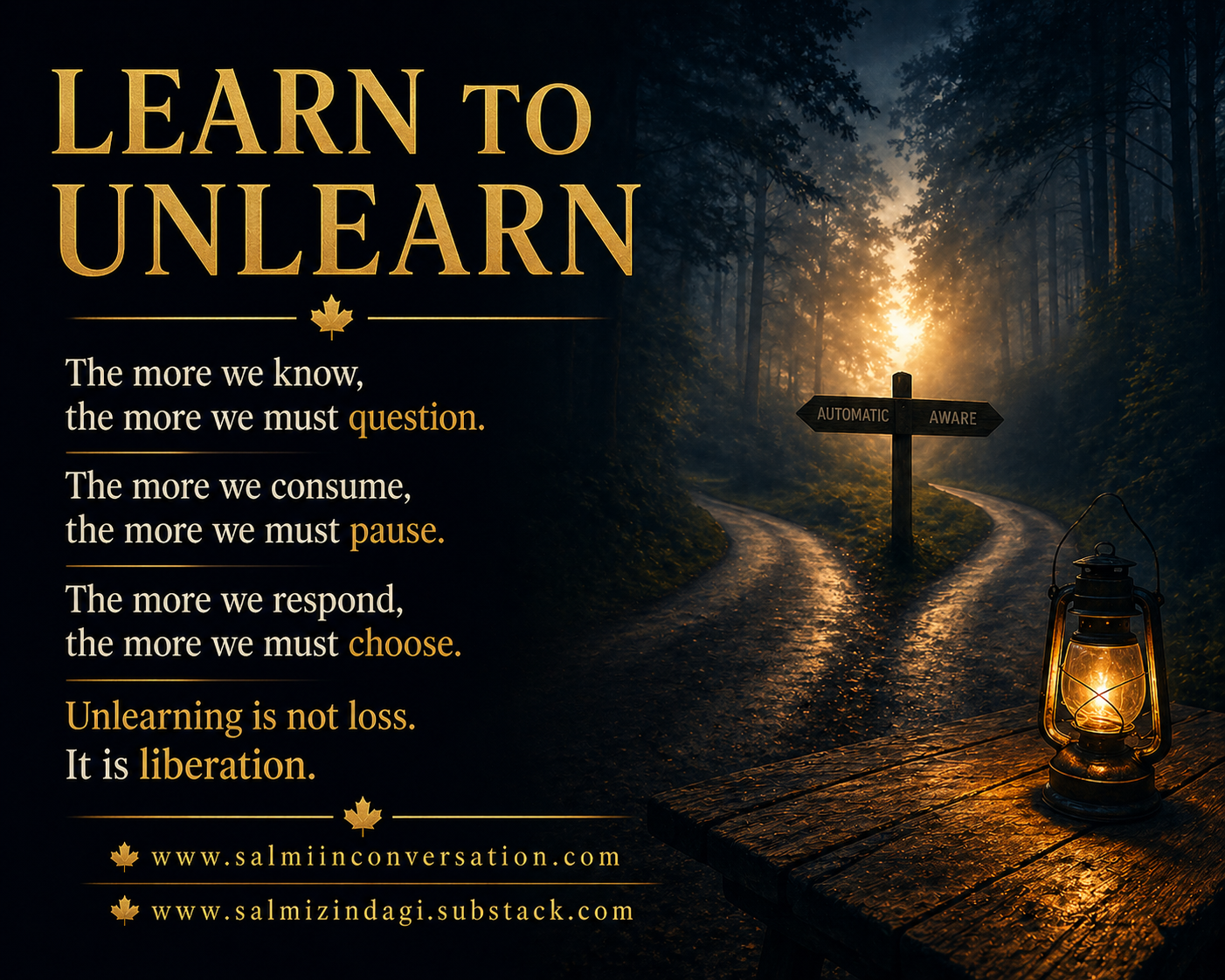
Unlearning is awareness in motion.
It is the ability to pause
where speed is expected.
To question
where acceptance is easier.
To step back
where engagement is automatic.
It is the quiet discipline of asking:
- Why am I seeing this?
- Why am I reacting this way?
- Why does this feel necessary?
In an age that rewards immediacy,
unlearning restores intention.
When Drivers Must Unlearn Control
Those who create, lead, and influence carry a different responsibility.
The instinct is to do more.
More content.
More presence.
More visibility.
But not everything requires amplification.
Not every thought needs to be shared.
Not every moment needs to be captured.
Not every silence needs to be filled.
Because sometimes,
restraint is a deeper form of intelligence.
To choose not to engage
is also a form of leadership.
When Passengers Must Unlearn Dependence
For those who observe, absorb, and follow—
the challenge is quieter, but no less significant.
Not every answer is insight.
Not every trend is truth.
Not every voice deserves attention.
The ease of access has created a subtle dependency.
A reliance on external flow
to shape internal understanding.
And yet, the ability to step away—
to reflect without input,
to think without prompts,
to feel without guidance—
remains one of the last untouched freedoms.
Because sometimes,
silence is not absence—
it is participation of a different kind.
A Shared Responsibility
Drivers and passengers are not opposites.
They are roles we move between—
often within the same hour.
At times we lead.
At times we follow.
At times we simply exist within the current.
This is not a divide.
It is a shared condition.
And within it lies a shared responsibility:
To remain aware.
To remain present.
To remain human.
The Question That Remains
The question is no longer:
Are we learning fast enough?
The systems will continue to learn.
The tools will continue to evolve.
The pace will not slow down.
The real question is:
Are we unlearning what quietly distances us
from our ability to live, to think, to feel—
on our own terms?
Because in the end,
it is not the speed of learning
that defines us—
it is the depth of awareness
we are willing to reclaim.
Let’s continue the conversation.
© 2026 Sulaiman Nasir | Life in Conversation with Salmi
All original writing, narration, and visual concepts remain the intellectual property of the author. Unauthorized reproduction, adaptation, distribution, or use of this work is prohibited.
🇨🇦 www.salmiinconversation.com
🇨🇦 https://salmizindagi.substack.com