Roots
Soft Skills or Severed Roots?
Life, Fellowship, and the Search for Haqīqat (Lived Reality)
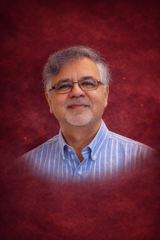
Sulaiman Nasir (Salmi)
There was a time when no one taught listening as a skill.
No one certified empathy.
No one attended workshops to learn collaboration, emotional intelligence or the art of being present.
These qualities were not absent.
They were simply alive.
They lived within homes, friendships, neighbourhoods, classrooms and communities. They were absorbed through proximity, practised through responsibility and strengthened through belonging.
Today, we call them soft skills.
The phrase sounds modern, useful and progressive.
Yet hidden inside it may be one of the quietest confessions of our age:
Something essential has been separated from the soil in which it once grew.
What Does “Soft” Really Mean?
Listening.
Trust.
Presence.
Empathy.
Integrity.
Patience.
The ability to recognize another person without immediately measuring their usefulness.
Are these qualities truly soft?
Or are they the invisible foundations upon which families, institutions and entire civilizations depend?
We often call something soft when it cannot be easily measured.
Technical skills can be tested.
Productivity can be calculated.
Performance can be evaluated.
But how do we measure the person who restores dignity to a difficult conversation?
How do we calculate the value of someone who listens before judging?
Where does patience appear on a balance sheet?
What number can adequately represent trust?
Perhaps these human qualities were not called soft because they lacked strength.
Perhaps they were called soft because our systems could not determine how to count them.
When Life Was the Teacher
Before relational qualities became professional competencies, life itself carried the curriculum.
Homes taught patience.
Friendships taught loyalty.
Shared responsibilities taught cooperation.
Silence taught attentiveness.
Children encountered dignity before learning its definition. They recognized kindness before anyone explained its theory. They learned how to wait, share, apologize and remain present—not through certification, but through living among others.
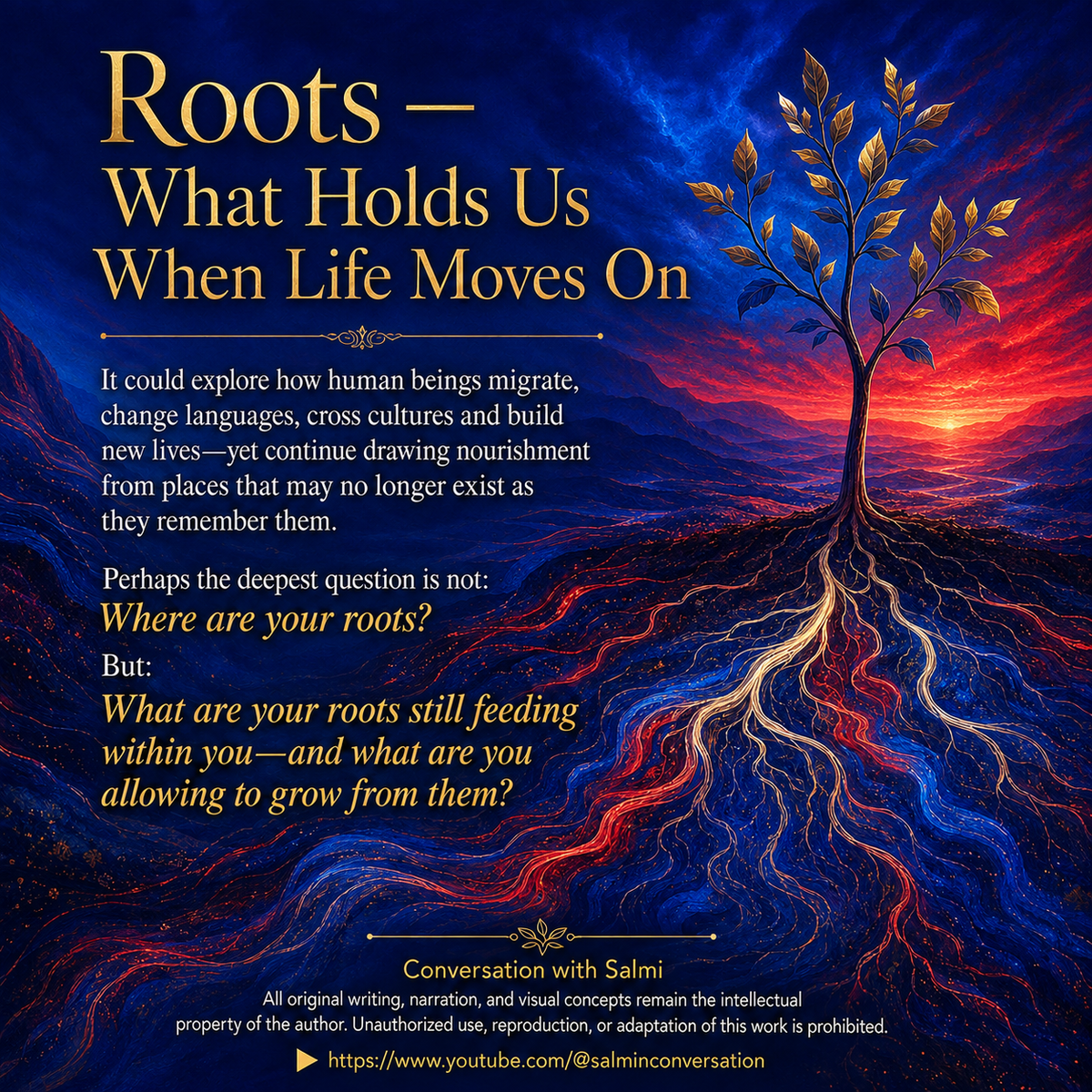
Character developed as a tree develops.
Quietly.
Gradually.
Often invisibly.
No one applauds the root while it is growing underground.
Yet the entire tree depends upon it.
Roots carry memory.
Roots provide continuity.
Roots connect visible life to invisible nourishment.
From those roots grow branches of relationship.
From those branches emerge trust, compassion, imagination and fellowship.
When roots remain alive, connection does not require constant instruction.
Life recognizes life naturally.
The Necessary Confusion of Modernity
Modern life did not deliberately abandon human connection.
It reorganized the conditions under which connection once developed.
Mobility replaced continuity.
Efficiency replaced proximity.
Achievement challenged belonging.
Individual advancement became more important than shared formation.
These changes brought opportunity, freedom and extraordinary progress. They allowed people to cross boundaries, escape limitations and create lives previous generations could scarcely imagine.
But progress also altered the soil.
Families became dispersed.
Communities became temporary.
Work became increasingly transactional.
Time itself became scheduled, divided and monetized.
When the natural environments of relational learning weakened, institutions began attempting to recreate what had been lost.
Listening became training.
Empathy became competency.
Collaboration became methodology.
Presence became technique.
What had once emerged organically from belonging now had to be deliberately taught.
Perhaps soft skills are not new skills at all.
Perhaps they are institutional names for ancient human capacities we are struggling to remember.
When Relationship Becomes Strategy
Something else changed as human interaction entered increasingly measured environments.
Networking began replacing knowing.
Visibility began replacing presence.
Engagement began replacing understanding.
Relationships quietly became strategies.
Who can advance us?
Who can recommend us?
Who can expand our reach?
Who can strengthen our position?
These questions are not always malicious. People must work, cooperate and create opportunities. Relationships have always helped human beings survive and progress.
But when every encounter begins carrying a calculation, the human space starts shrinking.
A person becomes a contact.
A conversation becomes an opportunity.
A community becomes an audience.
Recognition becomes a metric.
Eventually, even the self may begin to perform rather than live.
The Exhaustion of the Unrooted Self
Modern individuality promises freedom.
It tells us to become independent, visible, distinctive and self-sufficient.
There is dignity in developing a strong self. But selfhood without grounding can become another form of fragility.
A rootless tree may appear tall.
It may stand impressively for a while.
But height is not the same as strength.
Without nourishment beneath the surface, individuality becomes dependent upon continuous external confirmation.
Am I being seen?
Am I being recognized?
Am I progressing?
Am I still relevant?
The self must constantly announce, explain and defend its existence.
This creates an exhaustion deeper than physical tiredness. It is the fatigue of carrying an identity that is no longer nourished by belonging.
We become connected to more people while feeling known by fewer.
We become visible everywhere while remaining present almost nowhere.
We accumulate contacts but hunger for companionship.
We perfect the appearance of confidence while quietly searching for somewhere to stand.
Khudi (The Conscious Self) Was Never Isolation
A strong self does not require separation from humanity.
Iqbal’s idea of khudi was not the celebration of an isolated individual. It was a call toward a self-strengthened by consciousness, responsibility, purpose and moral courage.
The rooted self is not dissolved by relationship.
It is deepened through it.
Roots do not imprison a tree.
They allow it to rise.
Belonging does not necessarily weaken individuality.
At its best, it gives individuality the confidence to grow without turning every difference into a threat.
The question, therefore, is not whether we should become individuals.
The deeper question is:
What is nourishing the individual we are becoming?
From Factual Truth to Haqīqat
Factual truth is what evidence establishes.
Haqīqat is reality as deeply experienced, understood and lived.
Modern systems are highly capable of producing information.
They gather evidence.
They organize knowledge.
They test claims.
They establish what can reasonably be accepted as factually true.
This is indispensable.
But factual truth and haqīqat do not occupy identical spaces.
Factual truth tells us what is happening.
Haqīqat asks what that reality means when it enters a human life.
Factual truth may tell us that loneliness is increasing.
Haqīqat is encountering the human being who feels unseen.
Factual truth may demonstrate the importance of empathy.
Haqīqat is remaining present when another person’s pain becomes inconvenient.
Factual truth informs the mind.
Haqīqat transforms understanding into lived responsibility.
Our age possesses unprecedented access to knowledge, yet knowledge alone cannot restore roots. We can understand everything about human connection and still fail to connect.
Information can describe the soil.
Only life can nourish it.
They test claims.
They establish what can reasonably be accepted as true.
This is indispensable.
But truth and haqīqat do not always occupy identical spaces.
Truth can explain reality.
Haqīqat must be lived.
Truth may tell us that loneliness is increasing.
Haqīqat is encountering the human being who feels unseen.
Truth may describe the importance of empathy.
Haqīqat is remaining present when another person’s pain becomes inconvenient.
Truth informs the mind.
Haqīqat enters conduct.
Our age possesses unprecedented access to knowledge, yet knowledge alone cannot restore roots. We can understand everything about human connection and still fail to connect.
Information can describe the soil.
Only life can nourish it.
Can Fellowship Be Manufactured?
Organizations invest heavily in communication, leadership and collaboration.
These efforts have value. Skills can be strengthened. Awareness can be expanded. Harmful behaviours can be corrected.
But fellowship cannot be manufactured through technique alone.
Trust requires time.
Belonging requires presence.
Listening requires humility.
Human recognition requires something no manual can guarantee: the willingness to encounter another person without immediately reducing them to a category, function or use.
Flowers cannot simply be attached to disconnected branches.
The roots must live.
Perhaps this is why so many attempts to manufacture community feel temporary. They reproduce its appearance without restoring its nourishment.
We arrange the branches.
We display the flowers.
We create the language of belonging.
But beneath the surface, the soil remains unattended.
The Return
Perhaps the task before us is not to reject soft-skills training.
Nor is it to romanticize an earlier world that carried its own exclusions, silences and injustices.
The task may be more demanding.
We must recover the human foundations beneath the terminology.
To listen without preparing an immediate reply.
To meet without measuring.
To speak without manipulating.
To disagree without withdrawing dignity.
To recognize that another person’s value does not begin with their usefulness to us.
When roots return, relationships no longer need to survive entirely through technique.
Trust begins growing again.
Presence becomes possible.
Fellowship stops being a programme and becomes an experience.
Perhaps humanity was never lost.
Perhaps it was classified, professionalized and reorganized until we forgot where it originally grew.
And perhaps what we now call soft skills is life quietly calling us back—not toward the past, but toward a more deeply rooted future.
The question is no longer whether we possess the right skills.
The question is:
Are our roots still alive enough to make us human?
This is Essay I of a four-part reflection on Roots, Knowledge, Technology and Conversation.
Next: Knowledge and Information — and In Between
Conversation with Salmi
© 2026 Sulaiman Nasir | Life in Conversation with Salmi
All original writing, narration and visual concepts remain the intellectual property of the author. Unauthorized use, reproduction or adaptation of this work is prohibited.
🇨🇦 www.salmiinconversation.com
🇨🇦 salmizindagi.substack.com
▶️ Salmi in Conversation on YouTube